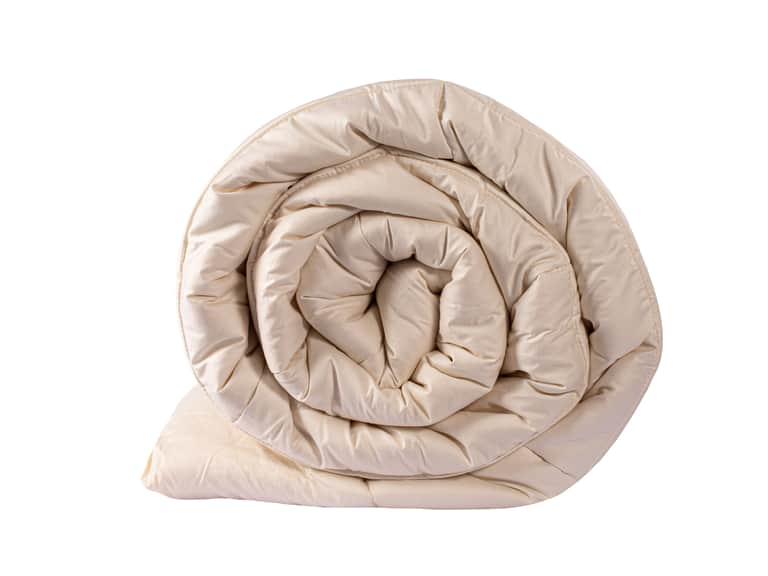
Wool comforters are prized for their natural breathability and temperature regulation, making them suitable for year-round use. The intrinsic moisture-wicking properties of wool help manage humidity, reducing overheating in warmer months while providing cozy warmth when temperatures drop. This material also resists odors and remains durable with regular use.
The Sleep and Beyond and myMerino Wool Comforter Light demonstrate how wool fibers trap heat without excessive weight, creating a balanced loft that supports restful sleep. Wool’s crimped fibers create air pockets that enhance insulation, while still allowing for airflow to prevent overheating during sleep cycles.
Key features to consider include fibre 100% wool composition, gauge and loft, and the comforter’s fill power. Wool comforters often offer natural flame resistance, elasticity, and long-term resilience. When selecting, evaluate warmth level, size compatibility, and care requirements to maintain fleece-like softness and structural integrity over time.
Functional benefits of wool comforters extend to allergy considerations, as wool is naturally resistant to common dust mites and can be easier to keep clean with periodic airing. The use of wool also supports long-term thermal comfort by adapting to changing body temperature, which can contribute to more consistent sleep patterns.
In the broader bedding landscape, wool comforters complement other components such as sheets, memory foam pillows, and latex toppers by providing a breathable layer that harmonizes temperature and moisture management. Understanding wool’s properties helps explain why this material remains a preferred choice for comfort and wellness-oriented bedding systems.
 Bedding